
By Akshay Shetty | AGR Knowledge Services
Beyond the landscapes, people and culture, what struck me on my recent journey was the pace of change across East African markets and what that change could mean for businesses across industries.
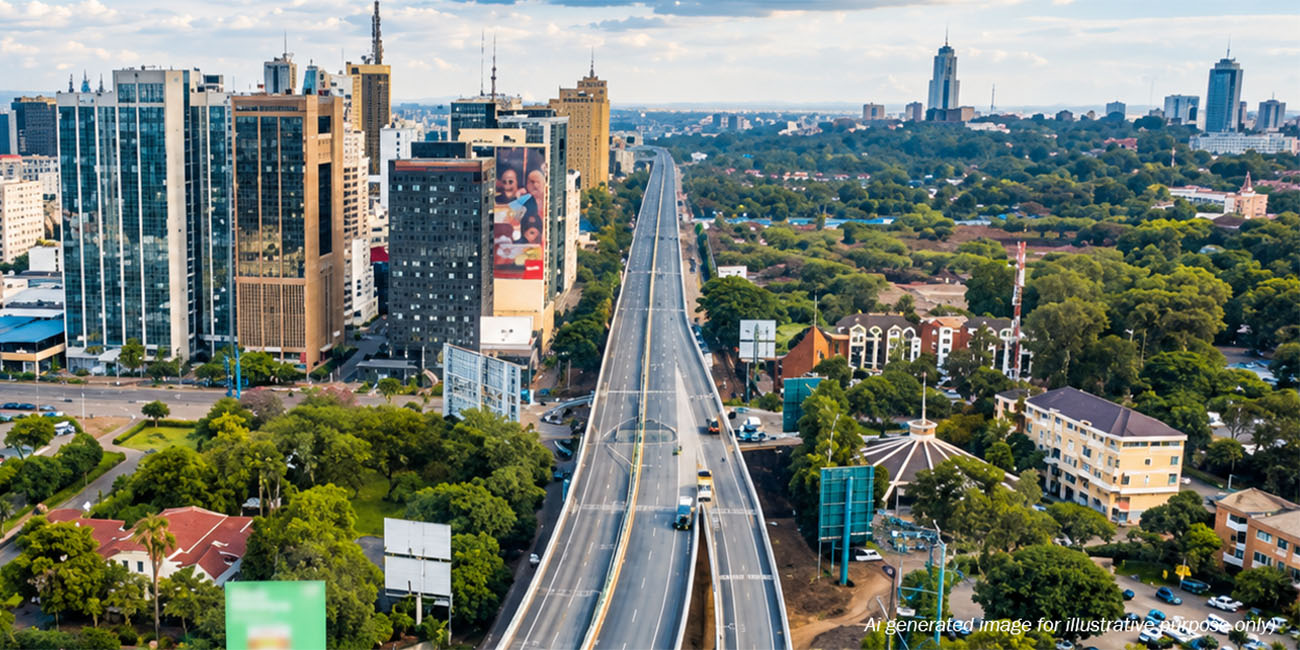
For years, Africa has often been viewed through the lens of its challenges: infrastructure gaps, limited industrialisation, fragmented markets and lower purchasing power. But travelling through East Africa gives you a different perspective. The region is increasingly being shaped by expanding cities, improving infrastructure, economic diversification and a young population with rising demand for better products and services.
Ethiopia: A Market Being Built at Scale
Ethiopia was perhaps the clearest example of this transformation for me. This was my second time visiting Addis Ababa, and the city genuinely looked different from my previous visit. Roads, buildings, commercial spaces and urban infrastructure are changing rapidly, sometimes at a pace that even local residents find surprising.
Ethiopia has an economy of roughly US$120–125 billion, placing it among Africa’s ten largest economies. It is also home to around 136 million people, making it Africa’s second-most populous country. The World Bank estimates that GDP grew as much as 9.2% in FY2024/25.
Agriculture remains the backbone of Ethiopia’s economy, but there is a growing opportunity to build more value-added industries around it. Textiles, agro-processing and pharmaceuticals offer potential for local manufacturing, supported by a large domestic market and the country’s push to reduce reliance on imported products. Manufacturing currently contributes around 4% of GDP, leaving considerable room for industrial expansion.
Infrastructure will play a major role in making this possible. The Grand Ethiopian Renaissance Dam (GERD), with 5,150 MW of capacity, was inaugurated in September 2025 and is Africa’s largest hydropower project. Alongside infrastructure such as the Addis Ababa–Djibouti railway, it reflects the scale of investment going into the country’s economic foundations. More reliable power and better connectivity can help manufacturers operate, move goods and serve markets more efficiently.
For businesses, Ethiopia’s scale is attractive, but understanding how to operate locally remains important. Access to foreign currency has historically affected companies dependent on imported machinery, raw materials and components, although recent reforms have sought to improve access. Conditions also vary beyond Addis Ababa and the main commercial corridors, with security considerations in some regions influencing where and how businesses expand.
Rwanda: Small Market, Big Ambitions
Rwanda feels different from the moment you arrive in Kigali. The city is clean, organised and compact, but what caught my attention was how visible electric mobility has become in everyday life. Electric motorcycles are an increasingly large part of the city’s transport landscape.
One conversation in Kigali stayed with me more than any statistic. Out of curiosity, I asked motorcycle taxi riders where the city needed more battery-swap stations. Their answer was surprisingly simple: there was very little gap. In many parts of Kigali, a swap station could be found roughly every 1–2 km. For riders who depend on their motorcycles for their daily income, that level of accessibility makes electric mobility far more practical.
Behind this visible transition is a small but fast-growing economy. Rwanda’s economy is worth around US$16 billion and grew rapidly at 9.4% in 2025, followed by another 9.4% year-on-year growth in Q2 2026. Services account for around 51% of GDP, with information and communication services up 29%. Industry contributes another 23%, with mining up 26% and construction up 24%.
The country’s ambitions are also much larger than its current economic size. Vision 2050 targets high-income status, with infrastructure, private investment and regional integration expected to play an important role in getting there.
Rwanda’s smaller domestic market does mean that long-term growth will also depend on how effectively businesses connect the country to the wider East African region. Its role as a regional business platform could therefore be as important as its own consumer market.
Kenya: East Africa’s Commercial Engine
Kenya is perhaps best known globally for its extraordinary wildlife and landscapes, from the Maasai Mara to the flamingo-lined shores of Lake Nakuru. Spending time in Nakuru was a reminder of how important this natural wealth is to the country’s global identity.
But spending time in Nairobi quickly makes you realise that there is much more to Kenya’s story. Beneath its tourism appeal is one of the region’s most developed and diversified economies, with Nairobi emerging as a major commercial and innovation hub.
Kenya’s economy is worth roughly US$140 billion, making it one of Africa’s ten largest. GDP grew 4.6% in 2025, according to the Kenya National Bureau of Statistics (KNBS). Nairobi has also developed into a regional hub for finance, technology and logistics, giving international companies a platform to reach the wider East African market.
Agriculture is still the largest sector, contributing about 19% of GDP, but it grew only 3.1% in 2025. The faster-moving anchors are financial services, up 6.5%, and tourism, where accommodation and food services grew 15.6%. Information and communication services have also continued to expand, reflecting Kenya’s growing digital economy.
Kenya is also looking to bring more capital into infrastructure development. The National Infrastructure Fund, with around KSh 340 billion in seed capital, aims to attract further private and institutional investment across energy, transport, ICT and agriculture. Dangote is investing in refining & petrochemicals in Lamu.
For companies looking to enter or expand in Kenya, the opportunity comes with considerations around financing and distribution. Beyond Nairobi, businesses also need to build strong local distribution networks, which can take time as they scale.
Mobility is Changing Alongside the Cities
Across all three countries, mobility emerged as a shared theme, although each is approaching the transition differently.
Ethiopia has taken one of the region’s most aggressive policy positions by banning the import of gasoline and diesel vehicles to accelerate electric mobility and reduce dependence on imported fuel. Its 2025–2030 e-mobility strategy targets 2,230 charging stations by 2030.
Rwanda shows what happens when policy and infrastructure move together. Since January 2025, only electric motorcycles can be newly registered as taxis in Kigali, and infrastructure has kept pace: a dense network of battery-swap stations means riders rarely face a gap.
Kenya, meanwhile, is building its own ecosystem around electric buses, motorcycles, charging infrastructure and fleet solutions.
Electrification is being driven not only by environmental considerations, but also by economics and energy security. The opportunity therefore extends beyond vehicles to charging infrastructure, battery swapping, financing, fleet management and after-sales services.
The transition is still at an early stage, and charging networks, service ecosystems and vehicle affordability will need to keep pace. But in markets where mobility demand is growing rapidly, electrification could allow parts of Africa to develop newer transport ecosystems without following every stage of the ICE-heavy development path taken by mature markets.
India–East Africa Connection
India’s connection with East Africa is also visible. Indian companies have built a strong presence across Ethiopia, Kenya and Rwanda, spanning automobiles, consumer goods, textiles, telecommunications and pharmaceuticals, with familiar names such as Airtel, Tata, Bajaj, TVS, Godrej, Mahindra and Cipla active in the region. Ethiopia, for example, has over 600 registered Indian companies with around US$5 billion in investment, while Kenya and Rwanda are home to ethnic Asian businessmen, contributing steadily to the growth of the local economy.
During the trip, the presence of the Indian community was also noticeable through businesses, familiar brands and wider commercial connections. It added a sense of familiarity to the region and was a reminder that the India–East Africa relationship has been built over decades through trade, business and communities.
What This Means for Companies
Here is what stood out: companies entering East Africa are not discovering these markets. They are joining them. China has built highways and railways, Italy’s Webuild built GERD, Indian companies have established positions in pharma, textiles and telecom, and Gulf investors are active in aviation. The companies that win will be the ones that find the right partners early.
These developments are also not happening in isolation. As cities expand and economies diversify, growth in one area is creating demand across others, from power and logistics to construction, digital services and infrastructure.
For companies looking to enter these markets, the opportunity therefore goes beyond identifying a growing sector. It requires understanding the market, assessing the competitive landscape, identifying the right entry strategy and finding the right local partners.
This is where AGR Knowledge Services can help, through market research, competitive assessment, partner identification and on-the-ground market understanding. We support companies in establishing their business, building the right partnerships and writing their own success stories in these geographies.
Perhaps the biggest takeaway from my journey is this.
Africa should not be looked at simply as one large emerging market. It is a collection of rapidly evolving markets, each with its own strengths, but sharing a common underlying story: urbanisation, infrastructure development, economic diversification, digital connectivity and rising demand for better products and services.
The next decade may therefore be less about asking whether Africa will become an important global growth market, and more about asking which companies will be prepared to participate when that growth accelerates.
After travelling through Ethiopia, Rwanda and Kenya, my view is simple:
Africa is no longer just a market of the future. The future is already being built there.
Author:
Akshay Shetty, an Assistant Manager with AGR Knowledge Services based in Mumbai, shares his recent travel experience across Ethiopia, Rwanda and Kenya and his perspective on the region’s evolving business landscape.