
By R. Subramaniam, Head of Sales | AGR Knowledge Services
Our colleague Subramaniam recently traveled through California and had some interesting conversations, which are summarized in a Q&A format. Data and supporting evidence have been included wherever available. Hopefully, this makes for interesting reading
Q: So, how is the American economy actually doing despite all the doomsday predictions?
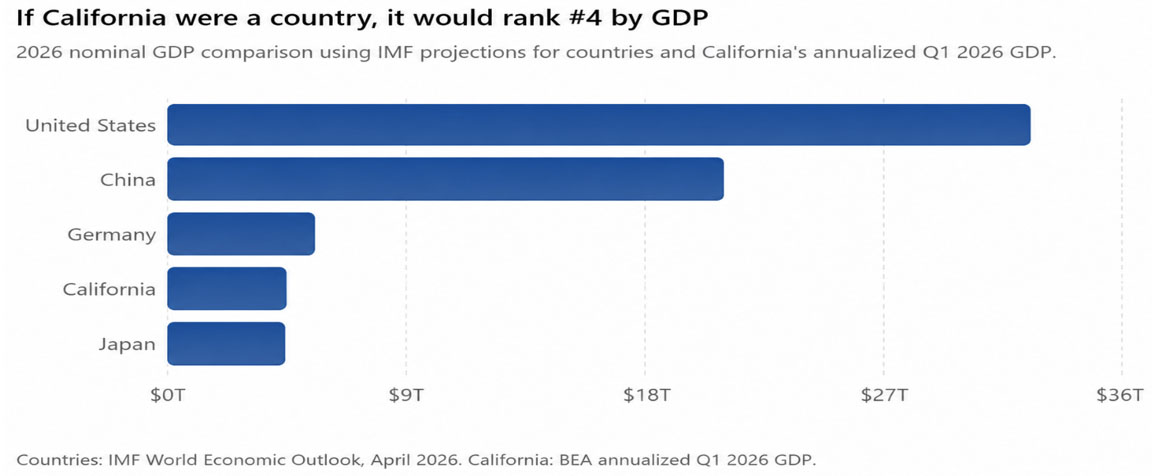
A: America’s sitting on about $40 trillion in debt, no getting around that. But despite it, the economy’s actually doing pretty well – you can see it if you look around. What people miss is that the US isn’t one single economy. Take California, the state I was traveling through – that alone is one of the top 5 economies in the world.
Q: What kind of proof are we talking about?
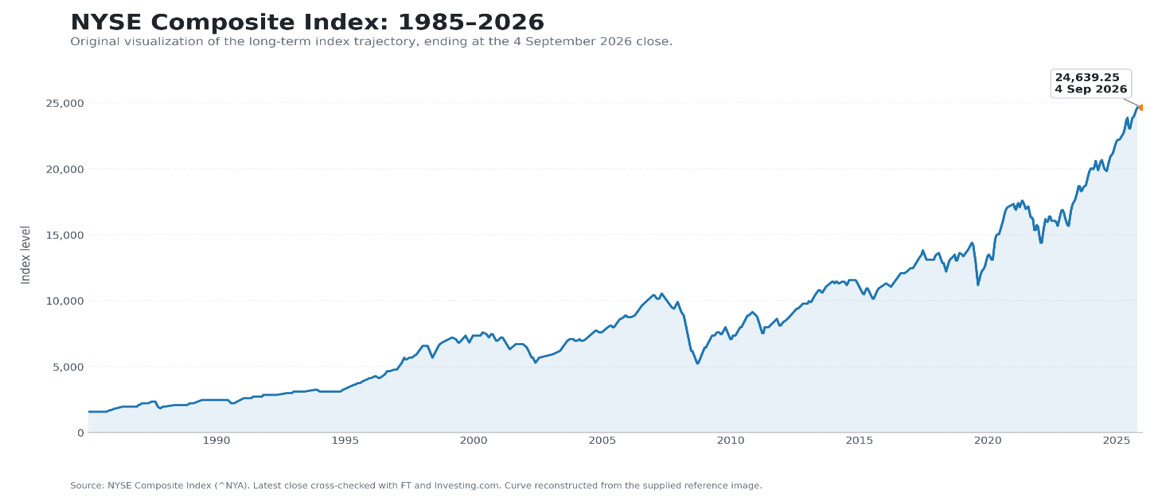
A: Start with the stock market – it is still rising. I invested in Microsoft a while back and it is worth a lot more today. And it is not just stocks – people are cashing out on stock options and putting that money into fancy houses in San Francisco, which creates a domino effect. Home prices that were supposedly under pressure are actually holding firm.
Q: If house prices are holding firm, what does that mean for renters?
A: It puts pressure on rents, which are going up too. A 3-bed, 3-bath in San Francisco now goes for 10k a month while in suburban Milpitas the same would be USD 4200 a month. Combining that with higher grocery prices (Read “Tariffs”) and higher fuel (Read “Hormuz”) – gasoline in California is now around $5 a gallon, compared to $3 back in New York – and families are feeling squeezed. Interestingly, some states like Pennsylvania are offering low-price gasoline (petrol) to ease that. Private players like Costco, which has a member-only model, are finding that discounted fuel attracts customers to their stores. Diesel is nearing $ 8 a gallon in California which increases trucking rates further pushing up prices of fruit, vegetables and groceries
Q: But if people are squeezed, how are they still investing?
A: That is the paradox – surpluses are still getting invested in stocks. Investing through apps such as Robinhood has become super easy. That drives up stocks. Many investors are sitting on paper profits, leading to a feeling of smug satisfaction.
Q: Are people actually spending money, or just saving/investing?
A: Both, honestly. Restaurants are full, malls are crowded, and credit cards and loans are easy to get if you have got good credit scores. Consumerism is in full swing.
Q: Is manufacturing likely to revive in the United States?
A: The tariff wall imposed by the Trump administration has actually benefited their steel and aluminum companies. They have bigger order books and longer lead times. That is benefiting businesses upstream and downstream. A petroleum refinery is being built (the first in 80 years), and petrochemical businesses are doing well thanks to the fossil fuels in the Permian basin in Texas. Do not expect labor intensive manufacturing of garments and leather shoes to make a comeback anytime soon
Q: What about infrastructure – is it keeping up?
A: Roads are built for high speeds (70 miles an hour or 112 km/h). Traffic jams do happen during peak hours. Cities are expanding too into suburbia. Maintenance of infrastructure is very visible, with teams working late into the night fixing roads and overpasses. There are strict rules and fines to keep things in order. The Bay Area is not a concrete jungle. There are plenty of open spaces, parks, and gardens – and most of them are free.
Q: Is immigration playing a role in all this?
A: Definitely. Its impact is particularly apparent in California. Mexicans and Central Americans are everywhere. Spanish can be heard more often than English in parts of Los Angeles and San Diego. Among the Indian diaspora, Sikhs are seen driving and owning trucks running on the highway from SFO to LA. Gujarati women are taking up low-skill jobs at motels and dollar stores, and Telugu-speaking workers – possibly students – are working late nights in 24/7 stores. All of that, points to plenty of jobs available, and a strong work ethic among Asian and Latino immigrants.
Q: What about AI – is that actually creating jobs, or just hype?
A: It is real. Besides creating euphoria in the stock market, AI is impacting the physical world too. Data centers are creating actual physical jobs. There is increased demand for cooling solutions, construction materials, water management, natural gas and other utilities, testing equipment, etc. But there’s pushback too, mainly around water and power rates potentially going up because of them.
Q: Is tech visible in everyday life, or is it just in the headlines?
A: Very visible – tech companies are advertising on billboards, on trains, and on neon signs on their HQs. And tech has genuinely created a lot of jobs in the Bay Area, replacing the banking jobs that moved to New York and manufacturing jobs that moved to Mexico.
Q: Is there more investment in defense with the wars in Europe and the Middle East?
A: Yes and no. Not all the big defense contractors are doing well. They need to have differentiated products which are affordable to be able to bag those lucrative defense contracts. Smaller companies that can design scalable and cost-effective solutions are in demand. Many Bay Area companies are using technology as a differentiator to make their mark with Government procurement.
Q: What is happening with retail – isn’t e-commerce supposed to have killed physical stores?
A: Not really. Shops like Macy’s are groaning under the sheer variety of goods – there is plenty of choice. If stuff does not sell, it gets marked down or sold in bulk to discount retailers like Marshalls, Burlington and Ross Dress for Less. And get this – the bookshop, Barnes & Noble, still exists! I genuinely thought Amazon had destroyed their business model.
Q: What about cars – is Tesla still the aspirational choice?
A: Not anymore. There is a huge variety of cars now, and Tesla is not seen as aspirational. It is good value for money, especially in places where electricity prices compete well with fuel costs. California therefore has many Tesla taxis.
Q: Any tips on managing electricity costs?
A: Yes. Time-of-day pricing matters a lot. Evenings, roughly 4–9 pm, are the most expensive window, so it is smart not to run appliances during that time.
Q: There is a theory that population decline means fewer people will need houses. Is that true?
A: That is actually a myth. Unlike Japan and parts of Europe, the population is still growing in the United States. People like to buy homes near their workplaces. Builders like Toll Brothers are building new housing and regional/city players are still active. Demand is not going away. However, the uncertainty around H1B visas is scaring away potential buyers with Indian and Chinese passports
Q: What is this about “clean property transactions”?
A: It means everything is transparent – done in “white,” no surprises. Appliances are included in your home price and are fitted before delivery, unless you do not want some of them. Loans are offered on the price of the fully furnished house, with 20% down payment required and breaks for first-time buyers (but they apparently come with some onerous rules).
Move-in dates are promised as committed (delivery dates), there is no overbooking, and they even show you a sample flat to check out beforehand. The entire home buying process is much simpler than we are used to in India.