
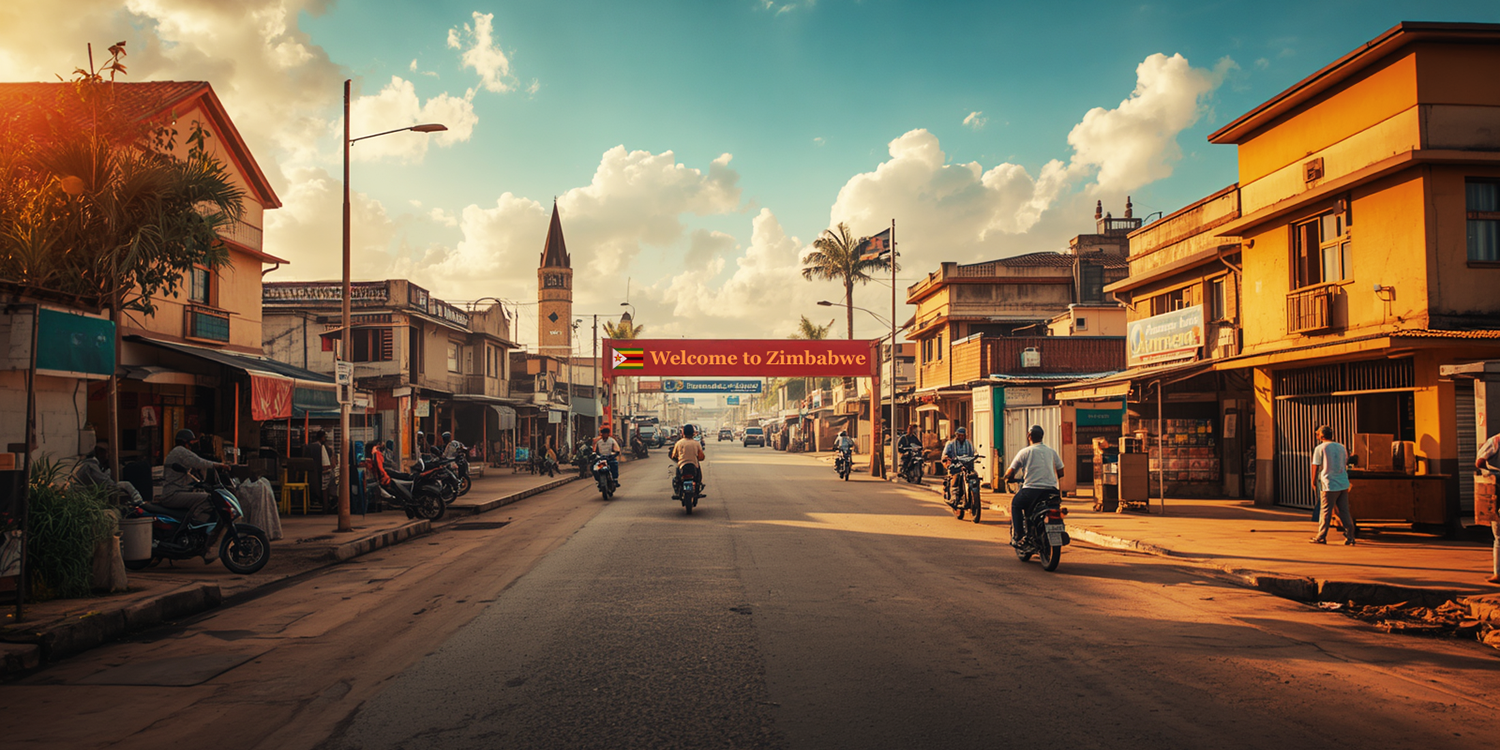
By Aman Benjamin | Sr. Analyst, AGR Knowledge Services
When your client asks for a first-over assessment in a market where almost no data exists, you pack your bags and go find it yourself.
Zimbabwe does not typically feature on the radar of mainstream market expansion strategies. Most people associate the country with its well-documented hyperinflationary crisis of the 2000s – a period so severe that basic needs became unaffordable for millions. What tends to be overlooked is the quiet but meaningful stabilisation that has taken shape in recent years, and the window of opportunity that recovery can create for businesses willing to move early.
A client of ours saw that window. The brief they shared was direct: assess the viability of entering the Zimbabwean market and determine whether a credible first-mover advantage was within reach. What followed was one of our more demanding field engagements in recent memory – demanding not because of complexity in the brief, but because of how little existed to work with before boots hit the ground.
A Market Built on Hustle
Zimbabwe’s economy operates differently from the structured, formalised markets of Southeast Asia or South Africa. The informal sector dominates. The average Zimbabwean juggles three or more income streams simultaneously – not as a lifestyle choice, but as a survival strategy forged through decades of economic instability. This shapes everything: how consumers spend, what they prioritise, and critically, what role a two-wheeler plays in their lives.
Conducting Research Without a Map
Our study covered the capital Harare, and the second city Bulawayo, spanning both urban centres and rural corridors. The methodology was deliberately primary-heavy: consumers, dealer-distributors, OEMs, food delivery operators, and independent delivery drivers were all brought into scope.
Reliable secondary data – the kind that typically gives you a baseline market size and a starting framework – was virtually absent for Zimbabwe. This was not just an inconvenience; it fundamentally changed the project’s centre of gravity. Every insight had to be surfaced through direct engagement. Our on-ground interviews had to be precise, structured, and far more qualitative in depth than a study of this type would normally require.
Local support proved indispensable. Our guide for the Harare leg – someone with genuine market familiarity who had done the groundwork before our arrival. That relationship extended to Bulawayo, where a trusted contact facilitated access that would have otherwise taken weeks to establish. In markets with thin data infrastructure, human networks are the research infrastructure.
What the Market Told Us
Several findings stood out. First, the road infrastructure challenge is real but navigable.
Second, Chinese brands have established a strong foothold, competing primarily on price and availability. Japanese incumbents like Honda and Yamaha maintain presence and carry a quality perception premium.
Beyond the Brief
Perhaps the most lasting takeaway from this engagement was the recalibration of perception. Every client call in the lead-up to the field visit opened with some version of the same question: “Are you safe?” The preconceived picture of Zimbabwe – shaped largely by its economic history and uneven coverage in travel documentation – did not survive contact with the ground reality. The people were open, commercially minded, and eager for opportunity. The aspiration to build something better was tangible.
The infrastructure gaps are real, as is the data scarcity. But for our client, the study delivered a clear verdict: the opportunity is credible and the timing is right.
Zimbabwe is open for business.
A field check often proves what any number of Google searches cannot.
This article is based on a primary research engagement conducted by our firm. Client identity and commercially sensitive findings have been withheld in accordance with our confidentiality obligations.