
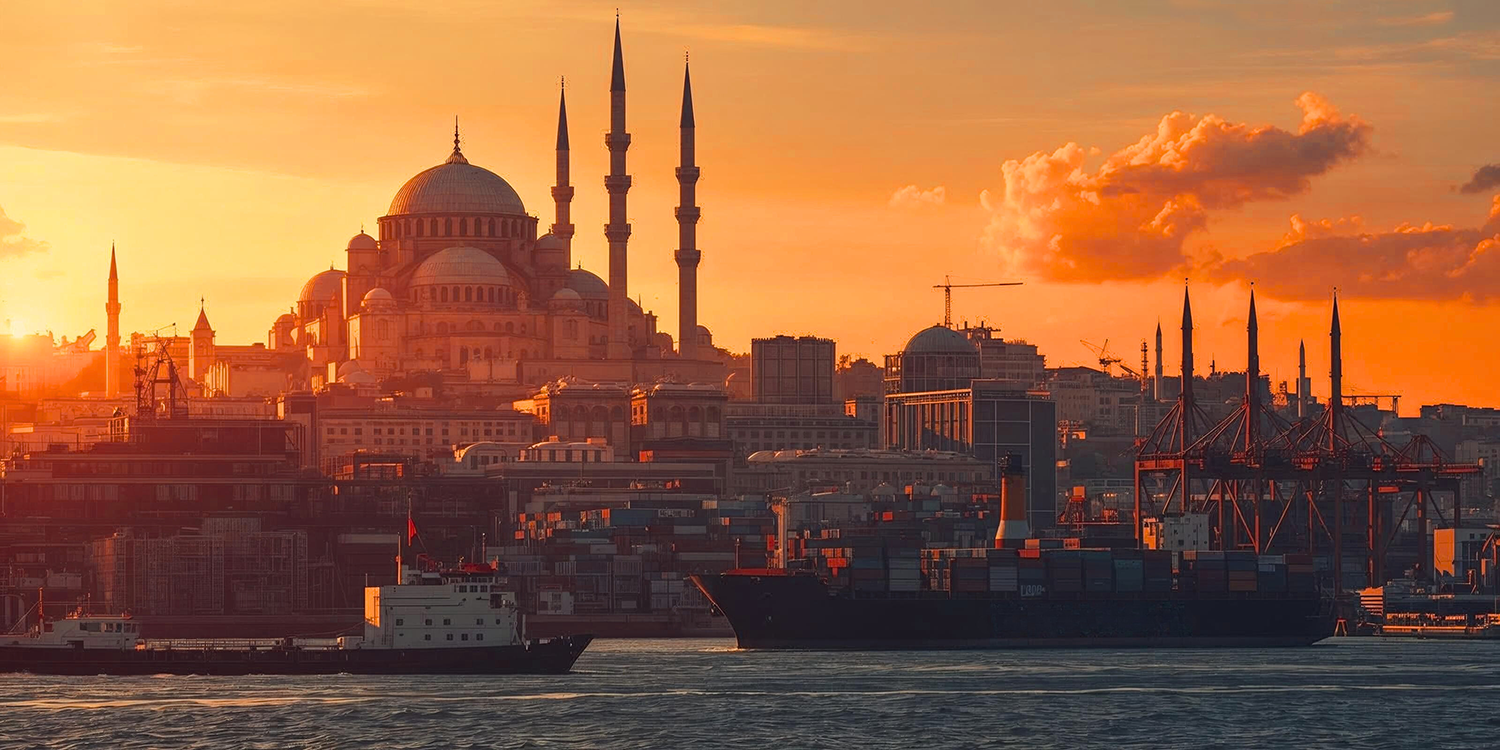
Turkey is widely recognized for its historical landmarks and tourism appeal. From sites like Hagia Sophia to traditional bazaars and waterfront areas, it attracts millions of visitors each year for its architecture, coastline, food, and cultural depth.
Yet beyond its tourism image, Turkey has built a strong economic foundation driven by manufacturing, trade, and industrial growth.
Economic Landscape
My recent visit to Turkey offered a first-hand perspective on how heritage and heavy industry operate side by side. Over the course of my visit, I spent time in Istanbul (the country’s largest city), Bursa, and the capital, Ankara, as well as nearby industrial regions. What stood out to me was how geographically strategic and commercially integrated the country is. Turkey is not merely located between continents; it actively operates as a connector of supply chains, markets, and capital flows.
From a macro standpoint, Turkey has a GDP of roughly USD 1.5 trillion (nominal), making it one of the prominent economies in the region. The country has faced high inflation and currency volatility in recent years. Inflationary pressures have forced businesses to be agile, cost-focused, and export-oriented.
Industry and Trade
Manufacturing contributes approximately 16-18% of GDP and is primarily driven by sectors such as automotive, consumer durables, textiles, chemicals, and defence. The sector plays a central role in exports, employment, and industrial competitiveness. With total exports crossing USD 250 billion in recent years, manufacturing-led sectors account for the majority of Turkey’s external trade performance.
The automotive industry remains Turkey’s largest export contributor, generating over USD 30 billion annually and producing more than 1.4 million vehicles per year. Companies such as TOFAŞ, Ford Otosan, and Oyak Renault reflect how deeply embedded Turkey is within European OEM supply chains.
Turkey ranks among Europe’s leading producers of home appliances, manufacturing tens of millions of units annually, with a substantial export share. Brands such as Arçelik and Vestel demonstrate how domestic manufacturing capability has evolved into global market presence.
Textiles and apparel remain one of Turkey’s longstanding industrial strengths, generating over USD 20 billion in annual exports. The country’s geographic proximity to Europe allows shorter production cycles and faster delivery timelines compared to Asian suppliers, contributing to competitiveness despite cost pressures.
The chemicals sector plays a strategic role in supporting automotive, construction, packaging, and consumer industries. While Turkey remains dependent on certain imported feedstocks, domestic chemical production capacity continues to expand, particularly in higher-value and specialty segments. Under strategic investment programs, chemicals remain a priority area for import substitution and export growth.
Defence and aerospace represent one of the fastest-growing industrial segments in Turkey. Defence exports have surpassed approximately USD 5-6 billion annually, reflecting sustained government support and technological investment. Companies such as ASELSAN, Turkish Aerospace Industries, and Roketsan highlight Turkey’s push toward advanced manufacturing capabilities beyond traditional industrial sectors.
Infrastructure and Investment Framework
Turkey’s manufacturing ecosystem is reinforced by extensive infrastructure and policy alignment:
- 300+ Organized Industrial Zones (OIZs) providing ready utilities and logistics connectivity
- Free Zones offering VAT exemptions and customs duty relief for export-oriented production
- Corporate tax reductions linked to investment scale
- Social security premium support for employment generation
- Customs exemptions on machinery imports
- Land allocation in designated industrial areas
Foreign investors are permitted 100% ownership, and priority sectors- including automotive, chemicals, machinery, and defence – receive targeted support under strategic incentive schemes.
Trade Architecture and Market Access
In my discussions and observations, many firms structure their operations with a clear focus on exports, particularly toward the European Union, Middle East, and North Africa. Turkey’s Customs Union agreement with the EU significantly strengthens its position as a near-shore manufacturing base for Europe, enabling tariff-free access for industrial goods and closer integration with European supply chains.
Beyond the EU framework, Turkey has signed 20+ Free Trade Agreements (FTAs) with countries across Europe, Asia, and the Mediterranean region, expanding preferential market access and reinforcing its role as a regional trade hub.
This trade architecture is supported by a well-developed logistics backbone. With an extensive port network across the Mediterranean, Aegean, and Black Sea coasts, along with established road and Ro-Ro connections into Europe, Turkey combines policy alignment with physical connectivity. The result is not just geographic proximity, but operational access.
For businesses evaluating supply chain diversification beyond East Asia, Turkey offers a blend of customs integration, FTA-linked access, and logistics efficiency that strengthens its competitiveness as a manufacturing and export base.
Inflation and Operating Realities
That said, inflation remains a structural constraint. While currency depreciation can enhance export competitiveness in certain categories, it also influences wage revisions, procurement cycles, and financing costs. Rising input expenses — particularly energy and imported raw materials — continue to place pressure on profitability. In response, businesses are increasingly focused on margin optimization, calibrated expansion, and diversified revenue streams to navigate volatility more effectively.
Business Environment and Culture
From a personal observation standpoint, I found business interactions to be professional and articulate. English proficiency in business circles is limited but my discussions were practical and number driven. Even where geopolitical narratives may differ at government levels, it does not translate into interpersonal friction in business settings. Conversations remained respectful, and commercially focused.
What also stood out was how culture subtly shapes business rhythm. Turkish heritage is deeply visible in architecture, food, daily routines, and even workplace etiquette. Hospitality is understated but consistent. And yes, chai is omnipresent. Whether you are in a corporate office or a manufacturing facility, a tulip-shaped glass of strong Turkish tea appears almost immediately. It becomes part of the negotiation atmosphere, a quiet cultural constant amid financial discussions.
Beyond chai, the food culture reflects the same depth- balanced, layered, rooted in tradition. Whether it was enjoying authentic baklava after a long meeting or exploring local cuisine in the evening, it was clear that culinary identity is central to social and professional interactions alike. Turkey is not without challenges, but it is undeniably dynamic. From what I observed on the ground, it is a country that understands trade, values industrial capability, and positions itself consciously as the bridge between Europe and Asia, not just culturally, but economically.
At the end of the day, it is the Turkish people who stand out as progressive, hard-working and cheerful.
Author: Akshay Shetty
Akshay Shetty, a Senior Business Analyst with AGR Knowledge Services based in Mumbai, recounts his recent travel experience in Türkiye